Category Archives: World

The World’s Most Emotional Countries

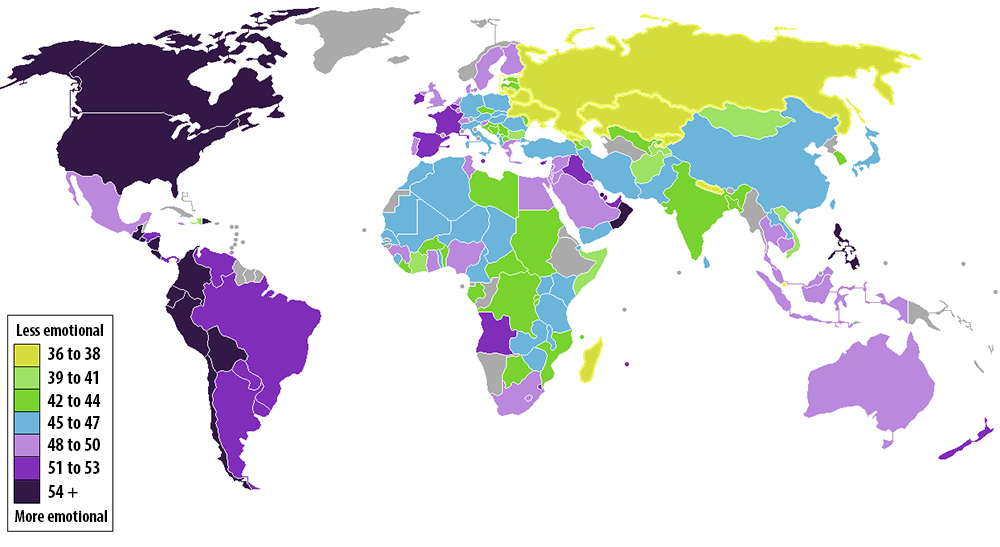
Emotional map of the world

A Gallup survey aimed at gauging the daily emotional responses of people around the world reveals which countries are the world’s most and least emotional. Max Fisher at the Washington Post created the map above and summarized the results of the survey as follows:

  • Singapore is the least emotional country in the world
  • The Philippines is the world’s most emotional country
  • Post-Soviet countries are consistently among the most stoic
  • People in the Americas are just exuberant
  • English- and Spanish-speaking societies tend to be highly emotional and happy
  • Africans are generally stoic, with some significant exceptions
  • The Middle East is not happy

How emotional is your country according to the Gallup survey?
Migrant Remittances Continue to Rise

click to enlarge

click to enlarge

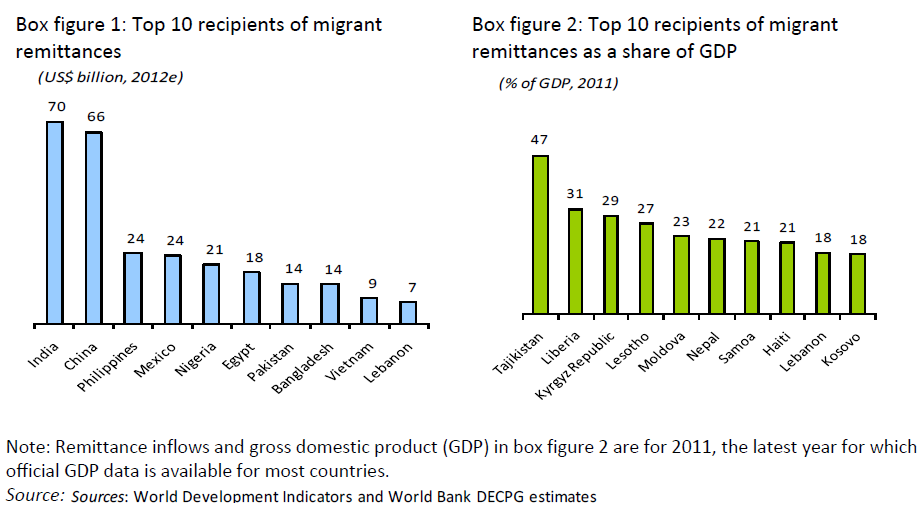
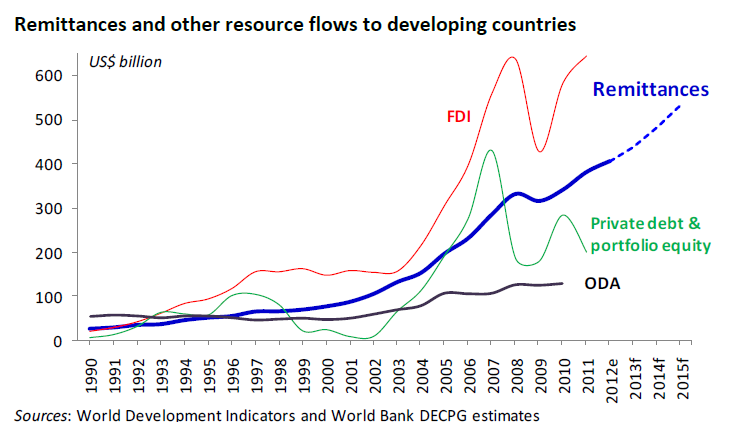
Migrant remittances to developing countries are expected to reach $406 billion in 2012, a 6.5 percent increase over the previous year, and $534 billion in 2015. These officially recorded remittances have kept increasing despite high remittance costs and the financial crisis. This source of income for developing economies constitutes more than three times the size of Official Development Assistance (ODA).

The highest recipients of migrant remittances among developing economies for 2012 are India, China, the Philippines and Mexico. As a percentage of GDP, the highest recipients in 2011 were Tajikistan, Liberia, the Kyrgyz Republic and Lesotho.

Resources:


More Plastic in the Pacific Ocean

click to enlarge

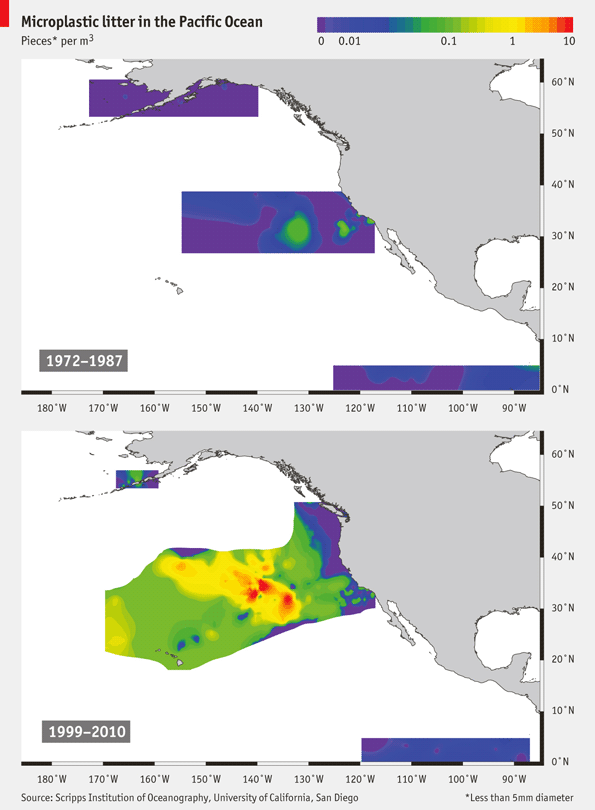
The amount of plastic pollution in the North Pacific Subtropical Gyre (NPSG), more often referred to as the North Pacific Garbage Patch, has increased dramatically in the last forty years, according to this map by The Economist. The plastic pieces 5mm in diameter or less, known as ‘microplastic’, are known to have an impact on the ocean’s ecosystem, mainly through ingestion of these particles by fish and invertebrates. The species that seems to be benefiting from the presence of the microplastic debris is the insect known as Halobates sericeus, that has way more surface where to lay its eggs. For detailed information see the complete research paper: Increased Oceanic Microplastic Debris Enhances Oviposition in an Endemic Pelagic Insect by Miriam C. Goldstein,
Marci Rosenberg, and Lanna Cheng.


The World’s Least and Most Dynamic Countries

Global Dynamism Index

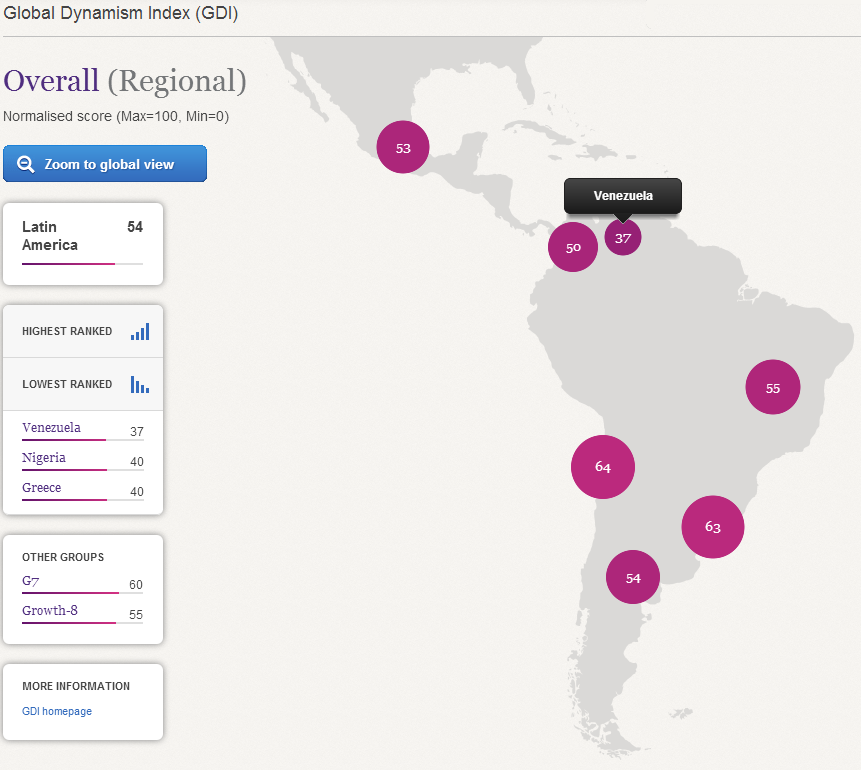
Grant Thornton International and the Economist Intelligence Unit have just released a Global Dynamism Index, which ranks 50 economies on 22 indicators of dynamism. Countries which have a positive reading on these indicators have recovered faster since the 2008 global recession, and are also on a path to higher future growth. Singapore, Finland, and Sweden are at the top of the list of the world’s most dynamic countries, whereas Nigeria, Greece, and Venezuela are at the bottom.

Cigarette Smoking Rates Around the World

click to enlarge

A color-coded map featured in an article by the Washington Post, shows annual per capita smoking rates by country. Serbia, Russia, and other countries in Eastern Europe, are the heaviest smokers, with an average consumption of 2,000 cigarettes per person per year. These countries are followed by Japan and South Korea, with China catching up. The U.S. and Canada are in the middle with an average consumption of 750 to 1,249 cigarettes per person per year. The healthiest countries tend to be poor countries located in Sub-Saharan Africa and in Southeast Asia, with an average consumption of up to 250 cigarettes per person per year.

Related Links:

  1. Kremlin Cracks Down on Big Tobacco – World Smoking Habits Data [Wall Street Journal]
  2. Key Facts About Smoking – [American Lung Association]


Megacities Around the World

click to enlarge

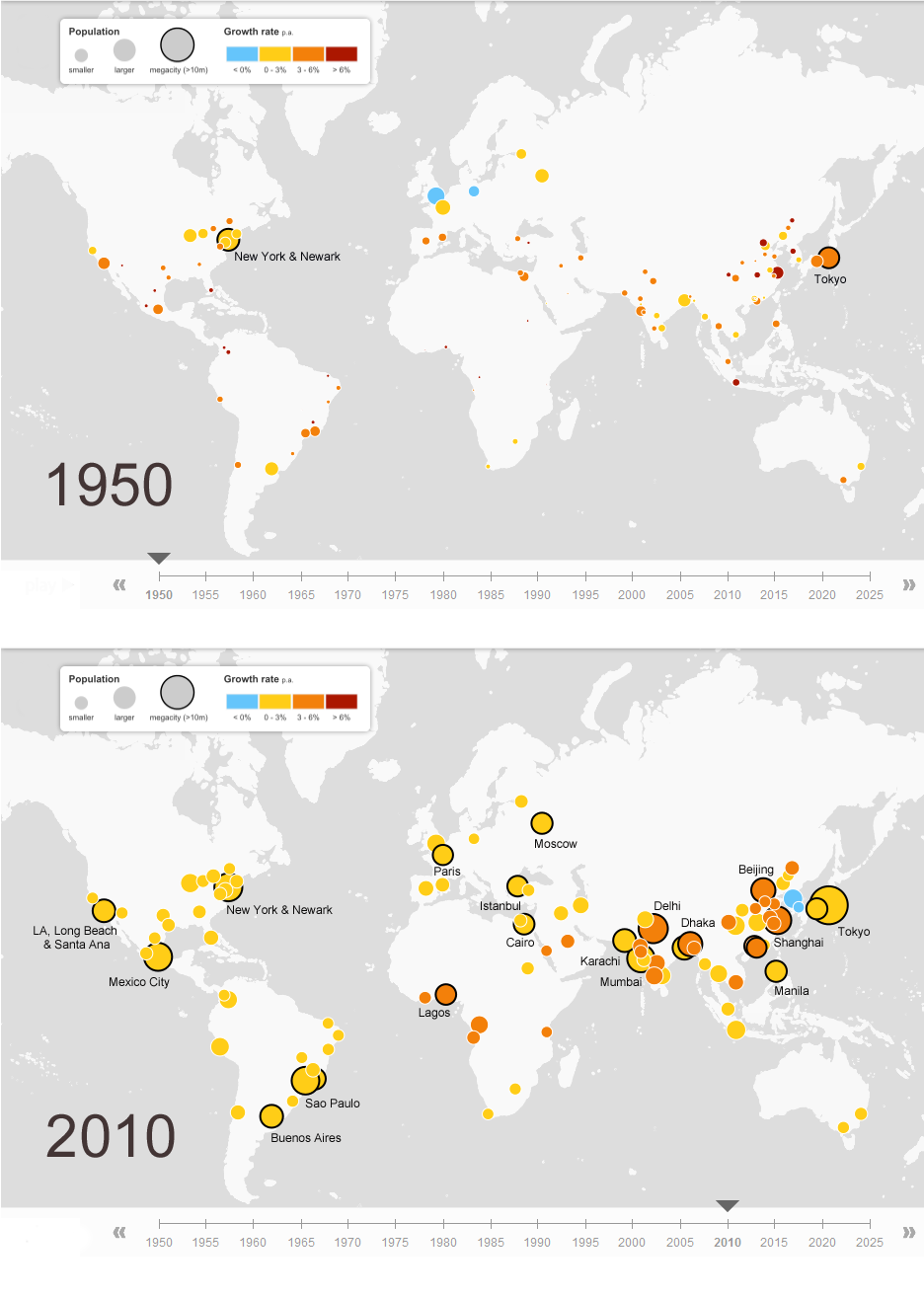
Back in 1950, New York and Tokyo were the only two megacities, with populations larger than 10 million inhabitants. By 2010 the number of megacities had increased to 23, including cities like Mexico City, Los Angeles, Sao Paulo, Rio de Janeiro, Buenos Aries, Paris, Moscow, Cairo, Istanbul, Delhi, Karachi, Mumbai, Dhaka, Beijing, Shanghai, Manila, besides New York and Tokyo, the largest megacity with a population of 36.9 million. For 2025, it is estimated that there will be 29 megacities around the globe. Click here for the interactive map.


Malaria Around the World

click to enlarge

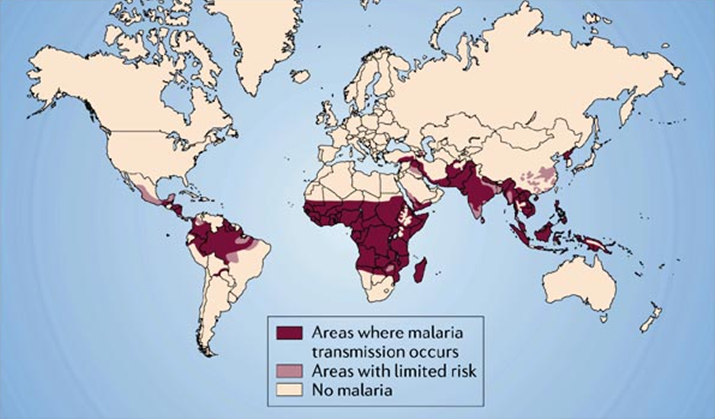
Malaria, a mosquito-borne infectious disease, affects 100 countries worldwide. It is mostly present in semi-tropical and tropical poor areas of Africa, South and Central America, and Asia. Of the 100 affected countries, 35 are located in Africa. Africa is the region most affected because its hot and humid weather makes transmission possible all year round. Lack of resources makes prevention and control of the disease very difficult. 89% of the malaria deaths worldwide occur in Africa.

Related Links:


Life Expectancy vs. Fertility Rates Worldwide 1960-2010

click to enlarge

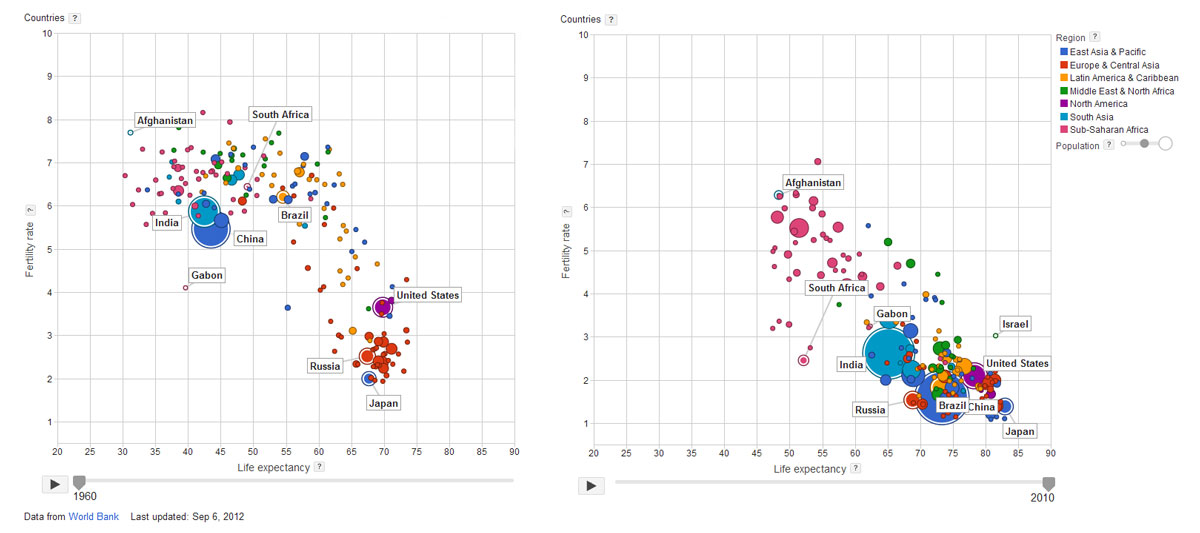
During the last fifty years, we have seen the gradual increase in life expectancy and the corresponding decrease in fertility rates worldwide. This is clearly the case of countries like China, India, the United States, Brazil, Japan, and Gabon, where dramatic improvements can be seen. On the other hand, countries like Russia, South Africa and Afghanistan, show moderate improvement.

It is very interesting to note, that although they have improved, a large cluster of African countries remain far from the overall trend, with lower life expectancy rates and higher fertility rates. For more information, check Google’s interactive bubble chart based on World Bank data.