Category Archives: Maps

Fossil Fuel Subsidies Globally

Fossil fuel subsidies are very common in developing nations. Subsidies cover the difference between the price at which fossil fuels are sold inside the country and their actual price in international markets, creating a huge fiscal burden (an estimated $400 billion annually) for the countries that provide them. Developing nations with fossil fuel subsidies include: Venezuela, Argentina, Ecuador, Algeria, Libya, Egypt, Kuwait, Iran, Pakistan, Russia, China, India, Indonesia, etc.

Developed nations also provide subsidies in the form of tax breaks to the oil industry and other measures (estimated at a cost of $45 to $75 billion per year). Nations in this group include many OECD (Organization for Economic Co-operation and Development) members.

For the interactive map, visit: National Geographic: The Great Energy Challenge: Fossil Fuel Burden on State Coffers
 

Male Gender Preference Globally

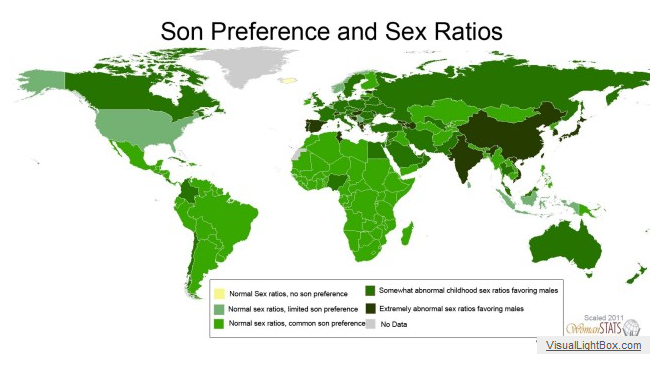
In this day and age, it is still surprising that in most parts of the world, there is still a preference for sons over daughters. It is even more surprising when you are talking about developed nations such as Spain, Portugal, Switzerland, Canada, Australia, New Zealand, Japan, and South Korea.

Other nations where the preference of sons overs daughters is extremely abnormal include China, India, Myanmar, Vietnam, and Malaysia among others.

Resource: Women Stats: Map – Son Preference and Sex Ratios


The Political Rights of Women Worldwide

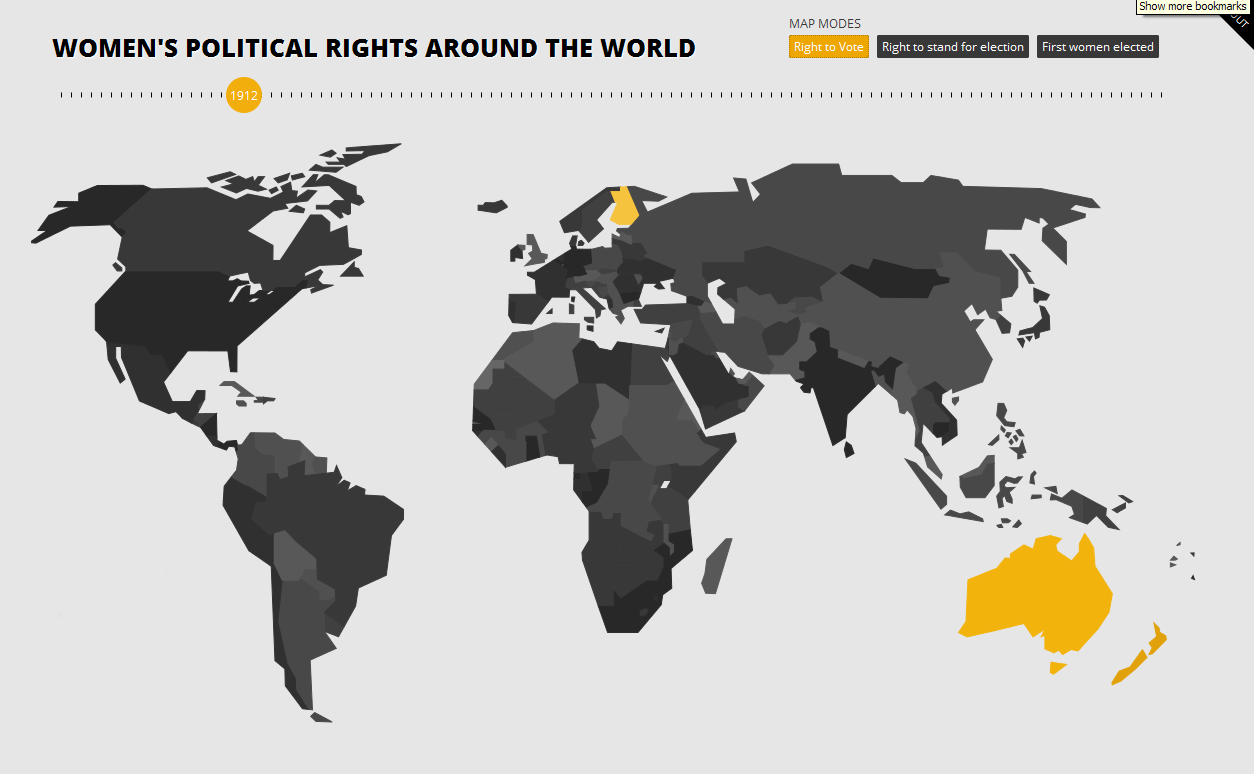
Back in 1912, the only countries where women had the right to vote were: New Zealand, which had granted voting rights to women as early as 1893; Australia, which had granted women the right to vote in 1902; and Finland, which had granted voting rights to women in 1906.


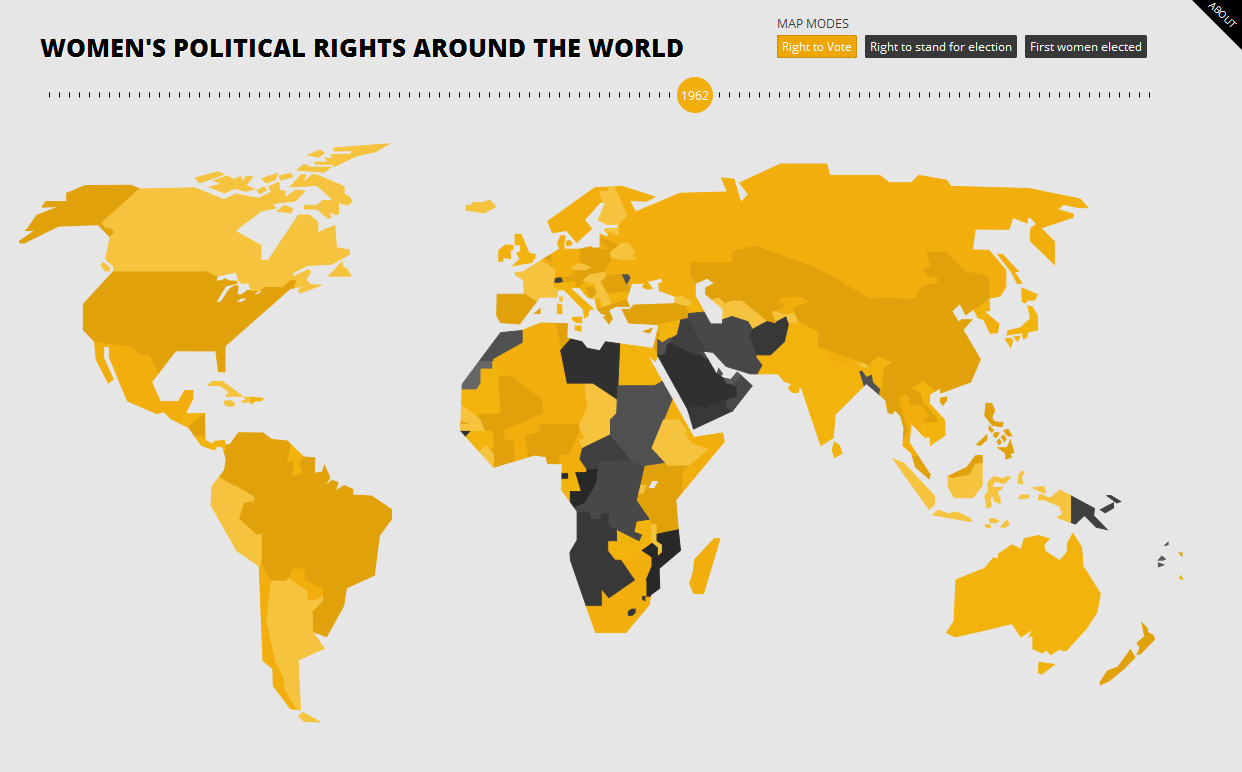
Fifty years later, in 1962, most nations in the world had granted women the right to vote. However, there were still many countries where women could not vote. Such countries included African nations like Morocco, Libya, Sudan, Congo, Angola, Botswana, Namibia, Mozambique, and Lesotho; countries in the Middle East like Jordan, Iraq, Saudi Arabia, Yemen, Syria, Oman, Iran, Afghanistan, and Bangladesh; Papua New Guinea, the only country is Asia. The nation that comes as a surprise in Switzerland, where women were granted voting rights as recently as 1971.


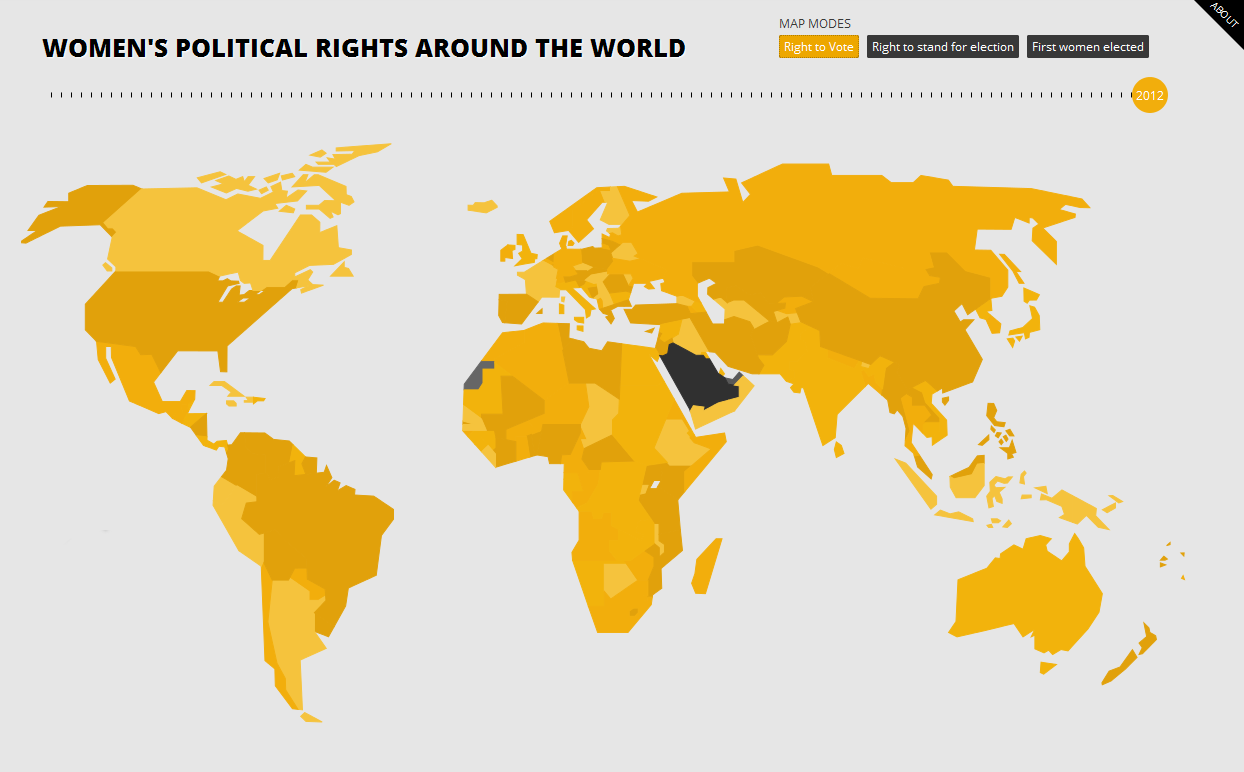
As of 2012, women have the right to vote anywhere in the world, except in Saudi Arabia.

For interactive maps on women voting rights, the right of women to stand for election, and first women elected to office worldwide, please visit:  777 Voting: Women’s Political Rights Around the World


Expected Years of Schooling for Females Worldwide

The expected years of schooling for females varies from country to country.

Developed nations such as the United States, Canada, the UK, France, Germany, Norway, Iceland, Australia, New Zealand, etc., show the highest number of expected years of schooling (15 to 21 years) for girls. Other nations in this group include Argentina, Uruguay, Kazakhstan, Libya, and South Korea.

On the other hand, countries with the lowest number of expected years of schooling (0 to 8 years) for females include most African countries, Pakistan, Afghanistan, Iraq, Yemen, Myanmar, Bangladesh, and Papua New Guinea.

Resource: The World Bank DataBank: Gender Statistics – Expected years of schooling for females

Life Expectancy at Birth for Women

Life expectancy at birth, for women, varies significantly across the world.

On one side of the spectrum, we find nations where the life expectancy at birth for females is 80.5 years or more. Countries in this group include the United States, Canada, Chile, several developed nations in Northern, Southern and Eastern Europe, Australia, New Zealand, Japan, and South Korea.

On the other side, we find nations where the life expectancy at birth for females is much lower, 62.0 years or less. This group is comprised by the majority of African countries, with the exception of North African nations, and Afghanistan.

Resource: The World Bank DataBank: Gender Statistics – Life expectancy at birth, female (years)


Milk Consumption Per Capita Worldwide

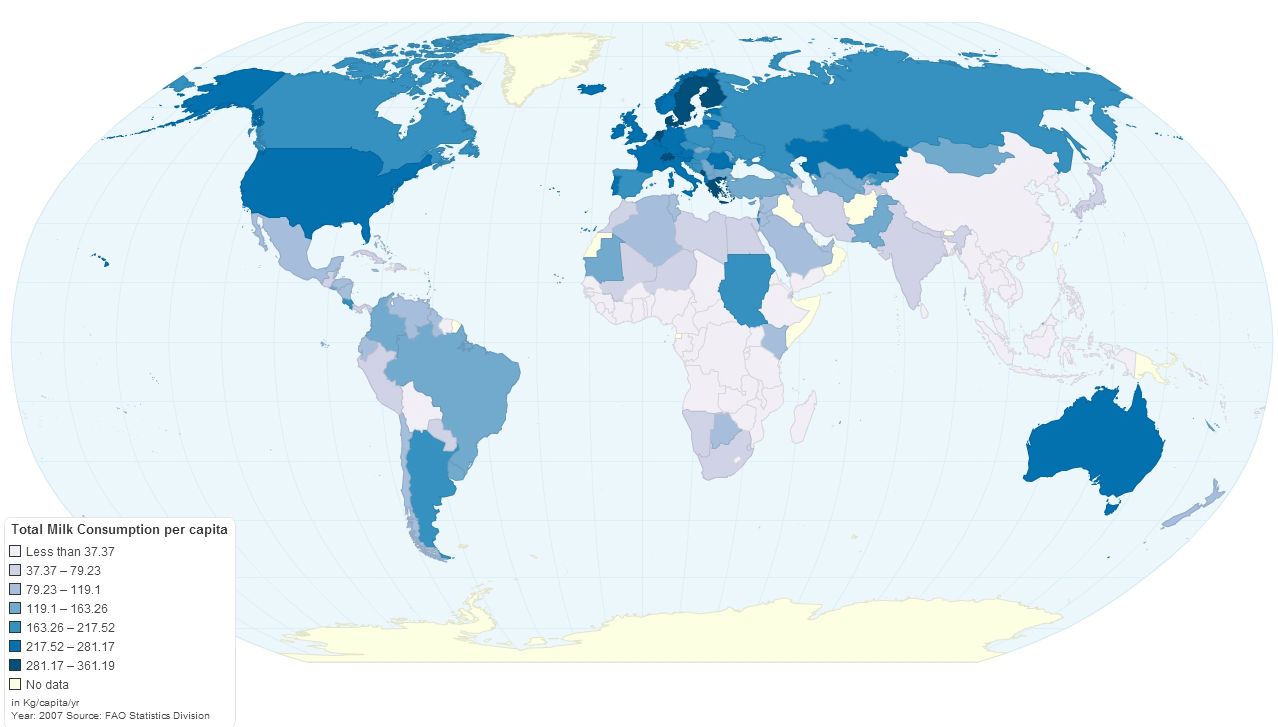
Milk and milk products are consumed all over the world on a daily basis. As shown in the graph above, the largest consumers of milk in the Americas are the U.S., Canada, Nicaragua, and Argentina. In Europe the largest consumers of milk are Sweden, Finland, Netherlands, Switzerland, Portugal, Greece, and Kazakhstan. In Africa, we have Sudan and South Sudan. Australia is also one of the largest consumers of milk.

The consumption of milk in this map is defined as Kg. of milk consumed per person per year.

Resource: Food Beast: Map of Milk Consumption & Lactose Intolerance Around the World


U.S. Military Personnel Around the World

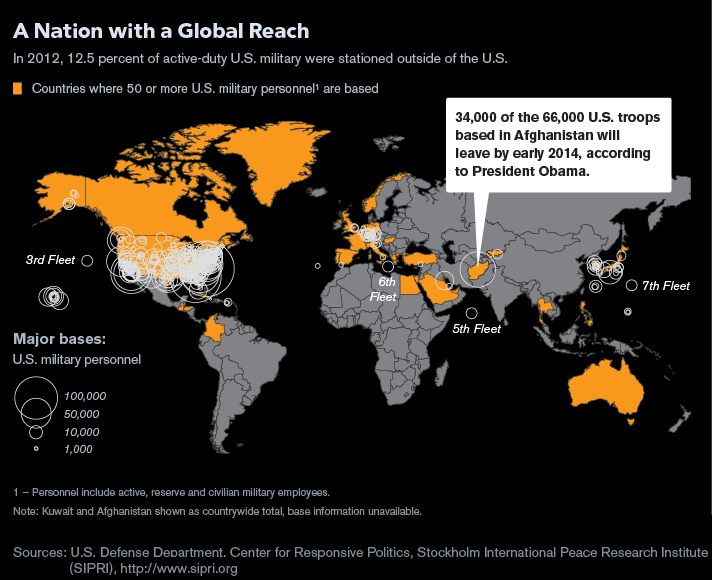
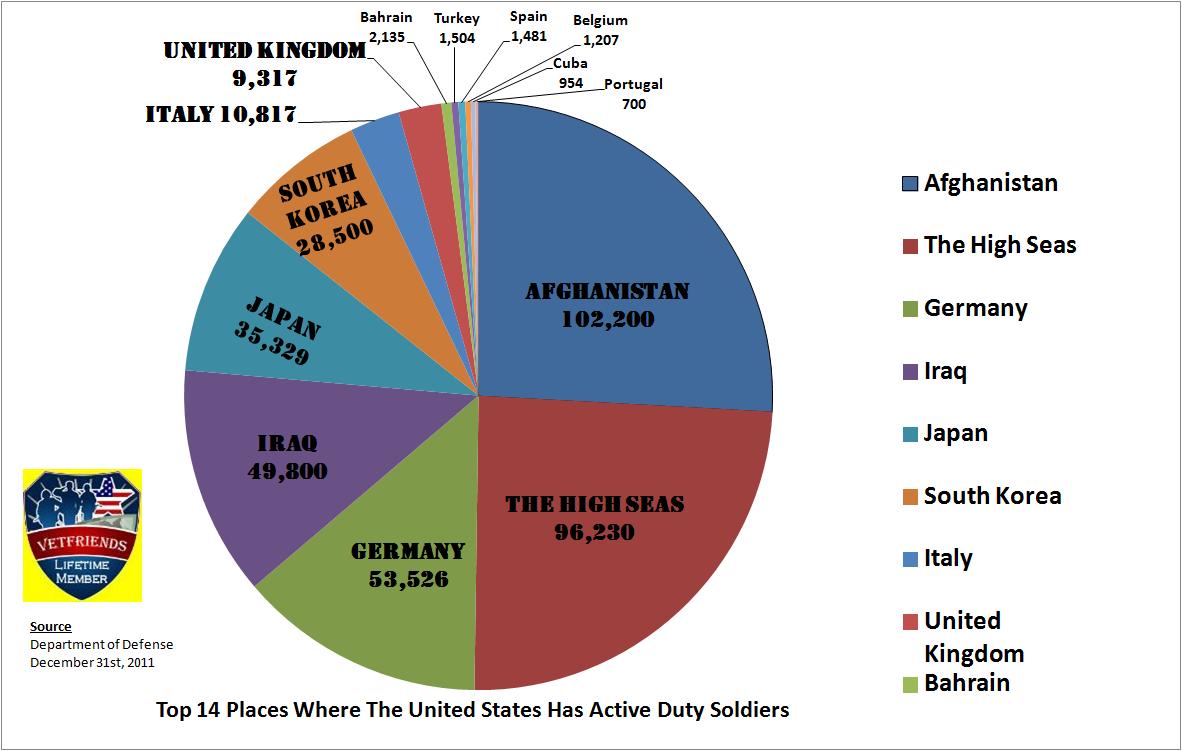
According to this map by Bloomberg, in 2012 approximately 12.5% of active-duty military personnel were stationed outside the United States, in places like Afghanistan, Turkey, Australia Canada, Greenland, Colombia, Guatemala, Honduras, Egypt, Myanmar, South Korea, Greece and Western Europe.

The pie chart above shows the top 14 places where the U.S. has active duty soldiers stationed.

Resources:


Global Vitamin D Deficit

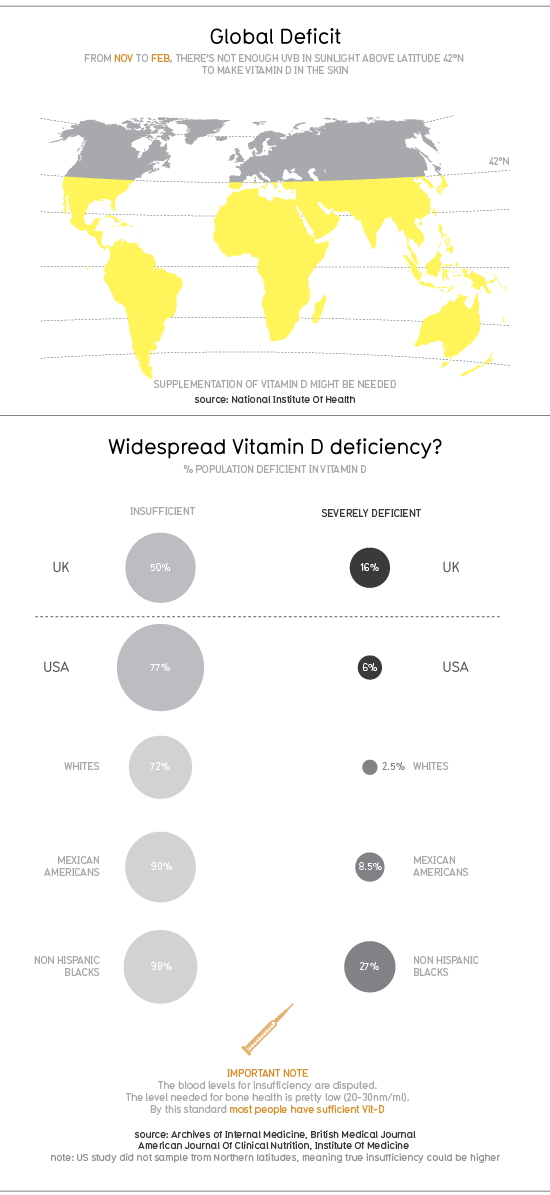
According to a 2010 infographic by Information is Beautiful, people inhabiting in the Northern hemisphere, more precisely above latitude 42°N, are not getting enough UVB light from sunlight to make vitamin D in the skin during winter season.

In the UK, 50% of the population has insufficient levels of vitamin D, while 16% of the population is severely deficient. In the United States, 77% of the population has insufficient levels of vitamin D, while 6% of the population is severely deficient. Within the U.S., the groups more affected by insufficient levels of vitamin D are Non-Hispanic blacks (98%) and Mexican Americans (90%).

To try compensate for the lack of UVB light in winter time and the consequent low vitamin D levels, consumers have turned to the vitamin D industry, an industry that is worth $460 million, as of 2009, in the U.S. alone.

For more graphics and statistics, visit: Information is Beautiful: Vitamin D

The Presence of McDonald’s Across the World

click to enlarge

One of the companies that symbolizes the dominance of US. corporations across the world is McDonald’s. McDonald’s is the second largest fast food chain in the world, according to a Nasdaq report for 2011, with more than 33,510 restaurants in 119 countries spread across all five continents.

The U.S. has the largest number of McDonald’s restaurants (13,381), followed by Japan (3,598), Canada (1,400), Germany (1,276), UK (1,250), and China (660).

The price of a McDonald’s burger is different in each country. According to the graph above, the most expensive ones can be found in Norway ($7.18), Denmark ($5.93), Iceland ($5.21), and in the Eurozone ($4.96). By comparison, the price of a McDonald’s burger in the U.S. is $3.57. These prices have been calculated using the Big Mac index published by The Economist, in order to measure the Purchasing Price Parity (PPP) between two currencies.

Resources:

  1. American Icons Temple: A Market-Dominant Minority that is McDonald’s
  2. Nasdaq: Subway tops McDonald’s for number of stores in world
  3. United States Securities and Exchange Commission – Form 10-K: McDonald’s Corporation
  4. The Economist: Big Mac Index


Meteorite Impacts Around the Globe

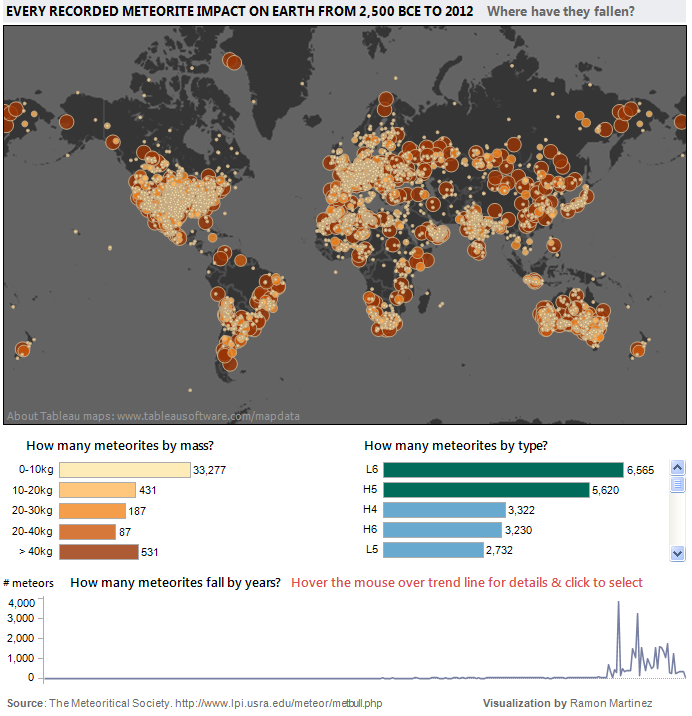
Between 2500 B.C. and 2012, a total of 34,513 meteorite impacts have been registered, 33,277 (96%) of them with a mass of 10 Kg. or less. Only 531 meteorites with a mass of 40 Kg. or more, have been recorded in the same time period. The most common type of meteor registered is the L6 (19%), followed by types H5 (16%), H4, H6,and L5.

In the lower graph it is interesting to note, that the frequency of meteor impacts remained relatively constant until the year 1974, when we start to see spikes and larger numbers of registered impacts that continue to the present.

For the interactive map, visit: Health Intelligence: Registered meteorites that has impacted on Earth visualized